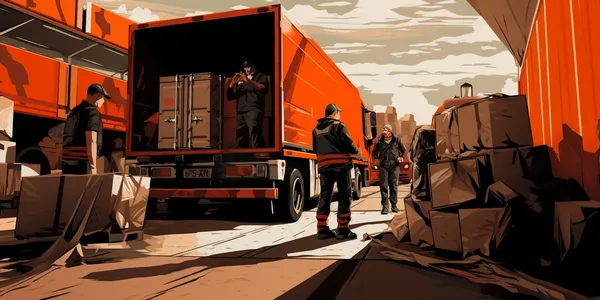
You have sent the directions, yet the driver is standing at the door asking where to go. Someone leaves their work to explain, and the truck may still need to move before receiving can begin. Before rewriting the message, follow it through to the driver: did it reach the person who needed it, before the decision they had to make?
Directions first. Door assignment later.
In this example, gate and check-in instructions are known before the journey. The receiving team confirms the door after check-in, once it knows which one is ready.
Ask the booking contact to pass the site directions and check-in link to the driver assigned to the load.
Sending directions and enabling the driver’s next action are different things. Follow the actual recipient, timing and meaning of the instruction to see where the gap occurs.
Follow the message to the person driving
Start with a recent arrival where the driver needed help. Ask what directions they received and how they received them. An appointment confirmation sent to a booking office may have reached dispatch while the driver received only an address and a reference number.
Ask the booking contact to pass the site directions and check-in information to the driver assigned to the load. Make those details easy to find and forward. If the carrier changes drivers, it needs a way to pass the same instructions to the replacement. Confirm that handoff with the carrier rather than assuming the facility will know every driver change.
The driver’s experience is useful evidence. In a 2020 study of urban deliveries in Gothenburg, researchers observed drivers pulling over to call customers after failing to find the correct receiving location. That single-company study illustrates a specific gap to investigate: reaching the destination address can still leave the receiving entrance unclear.
Send reliable instructions before the next decision
Separate what the facility already knows from what it will decide as the visit progresses. Gate location, the permitted approach, a waiting area and the check-in process may be known before the journey. Send those details early enough for the driver to use them when approaching the site.
Be concrete. “Use Gate 2, marked Goods In” helps the driver choose an entrance. “Wait in W1–W3 and check in using this link” explains what to do after entering. Match the names in the message to the signs the driver will actually see.
In its April 2026 report on Samsara's Canadian navigation launch, Truck News described the company’s provision of facility entry points, gate codes and check-in notes for the final approach. Those are distinct pieces of site information worth maintaining alongside your address.
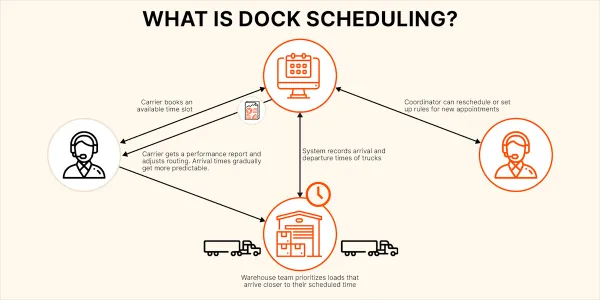
Door assignment depends on your operation. In the illustration, receiving confirms the door after check-in, when it knows which one is ready. The earlier message therefore explains where to wait and how the next instruction will arrive. A facility that can reliably assign doors earlier can communicate them earlier.
DataDocks supports appointment notifications and communication with carriers and drivers. Use that communication around your site’s sequence: arrival instructions first, then the confirmed next movement when it is ready to happen.
Test the arrival with someone unfamiliar with the site
Give a colleague who does not routinely receive deliveries the same instructions a driver gets. Follow the approach and ask them to identify the entrance, stopping place and check-in step using only those instructions and the visible signs. A direction that depends on knowing where “the usual receiving office” is needs more detail.
Compare that exercise with what drivers ask on real visits. A required staffed check-in serves a purpose; a repeated question about which entrance to use may reveal a missing instruction. Keep the distinction clear when deciding what to improve.
Choose one recurring question and repair the message at the point before the driver needs its answer. Confirm who maintains that detail when entrances, waiting arrangements or check-in procedures change. Then ask the next unfamiliar driver whether the directions helped them take that step, and where they still needed help.