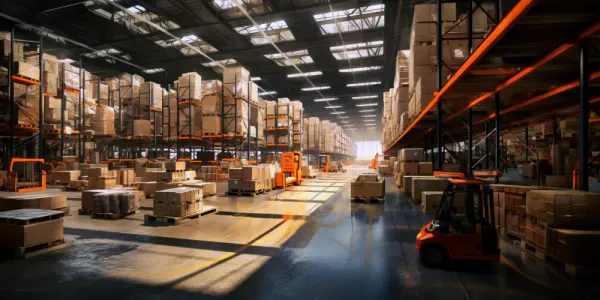
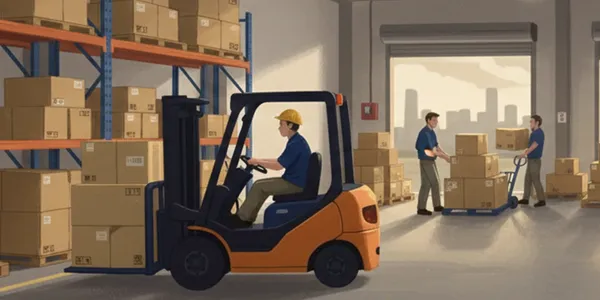
A truck gets unloaded, but its pallets are still waiting to be put away when the next delivery arrives. Receiving is moving freight off trailers. The staging area is filling up anyway. Before asking the team to unload faster, find out what is holding the goods there.
DataDocks creator and CEO Nick Rakovsky recommends following freight through the warehouse to see where the flow breaks down. A report becomes more useful when it points to a specific part of that journey you can investigate.
Watch Nick explain the reports he uses to understand warehouse costs, flow, and recurring errors below (11:10).
Follow the goods past the dock door
Nick describes walking the route from receiving through quality checks and storage, then back out to shipping. He looks for things that make that route harder: inventory stored far from the doors handling it, quality checks occupying space needed for other loads, or goods split across distant parts of the building.
Those problems can be difficult to distinguish in a single turnaround figure. Knowing that a load took 90 minutes to reach storage gives you a starting point. It does not tell you how much of that time went into unloading, checking the goods, or getting them put away.
Record the handoffs between those stages. Keep elapsed time separate from labor hours: a pallet waiting for an operator and an operator actively moving that pallet create different questions, even if both add time to the journey.
Find the stage that needs a closer look
Suppose unloading takes 15 minutes, quality checks take another 15, and put-away takes 60. That last hour needs a closer look: is the freight mostly waiting, or spending most of its time travelling to storage? Compare the two cases below.
Where did
the time go?
90minutes to storage
Are cleared pallets waiting for an operator, equipment, or a free storage location? A shorter route will do little for a queue that barely moves.
Are these loads using doors far from their storage location? Review dock allocation and repeated trips across the warehouse.
Record when goods are cleared to move and when someone actually collects them, as well as when they reach storage. Those handoffs help distinguish a queue from a long journey. Walk that part of the process with the team to understand what creates the delay.
Nick suggests reviewing dock allocation alongside storage locations and the space used for quality checks. A different door assignment may shorten a route, provided the door, equipment, and handling requirements are compatible.
Start with one recurring load type and compare similar loads across several shifts. After changing the process, check the stage times and the total again. A faster unload is little help if the goods simply wait longer for the next step.
How DataDocks helps
DataDocks reports let teams examine dwell time and appointment performance by carrier, dock, and day of the week. Use those patterns to identify where dock delays recur, then follow the freight through the warehouse to understand what is happening beyond the door.
See how DataDocks could help you investigate delays at your facility.