A receiving team can stay busy all morning and still leave a growing amount of work unfinished. Trucks have been unloaded, but pallets await checking or putaway. Meanwhile, outbound work needs the same people or equipment. To understand why receiving keeps falling behind, follow the work that remains and find out what it needs before it can move.
One crew. Two jobs.
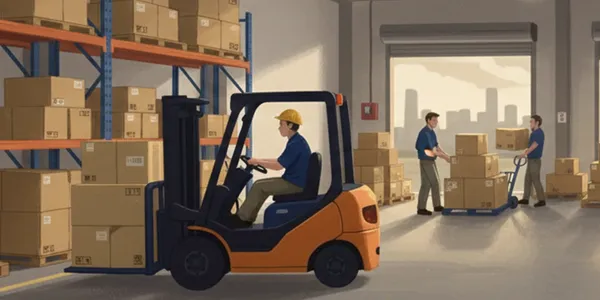
The inbound truck is unloaded, but its pallets are still on the receiving floor. In this example, putaway and outbound loading need the same crew and forklift.
Unloaded pallets waitingReceiving space cleared firstPallets wait until loading ends
Putaway unscheduledPallets put into storagePutaway is next
Crew busy loadingLoading is nextOutbound load completed first
Reserve a work period for putaway. Choose whether it comes before or after loading based on receiving space and the outbound departure time.
An unloaded truck is only one measure of progress. Follow the receiving task that remains unfinished and establish what it requires before choosing a change to appointments, resources or working methods.
Decide when receiving is actually finished
After unloading, your team may still need to check quantities, resolve a discrepancy, record the receipt or move the pallets into storage. Establish which tasks must be completed for that delivery, and what each needs before it can begin. A free dock door can coexist with a receiving floor full of unfinished work.
Follow a load that was still waiting when the team moved to outbound. Had the goods been cleared for putaway? Was a storage location available? When did the required crew and equipment become free, and was anyone expected to return to the job? Record the answers at the point where work stops. A task awaiting a decision needs a different response from one that is ready but has no time allocated.
A 2026 simulation of beverage returns in Bogotá represented reception, inspection and reloading separately, then evaluated verification staffing and scheduled arrivals as different interventions. Its setting was returned shipments, rather than a general warehouse putaway process. The useful discipline is to identify the stage being delayed before choosing what to change. See the study of the beverage returns operation.
Reserve the crew’s time for the remaining work
In the illustration, the inbound truck has already been unloaded. Putaway and outbound loading need the same crew and forklift. Leaving putaway unscheduled means its completion depends on a gap appearing around other work.
Either sequence could be reasonable. Putaway first clears receiving space before loading begins. Loading first may protect an outbound departure, provided the pallets can wait safely and there is a workable period for putaway afterward. Agree when that period starts, who carries out the task and what happens if loading runs over. “After shipping” needs enough time behind it to finish the work.
Review that sequence with the people responsible for both jobs. Include breaks, equipment availability and the next delivery’s space requirements. Check whether all the required work fits across the shift. Moving a task later cannot solve a shortfall that remains after realistic timing changes.
Physical space and handling capacity also need separate checks. A June 2026 multi-dock scheduling study explicitly models a station with two truck spaces but capacity to serve only one truck at a time. That is a particular modeled arrangement, but it illustrates why counting available spaces alone can overstate what the operation can handle. See how the study distinguishes spaces from simultaneous service.
Make the booking plan support completed receiving work
Once the team has agreed a feasible sequence, review what the next inbound appointment asks of it. A delivery that can be unloaded just before outbound starts may still leave checking and putaway competing for the same resources. Plan the booking around the work it creates beyond the door.
DataDocks can configure separate inbound and outbound booking periods and capacity limits. Use those settings to reflect the working periods your team has agreed, including time needed between commitments. The receiving team still needs to plan and confirm the checks and movements that follow unloading.
Try the change over a comparable receiving period. Check when the remaining tasks finish, whether space is available for the next load, and whether outbound departs as required. If putaway still carries into the next shift, investigate what prevented completion: unavailable equipment, inaccessible storage or more work than the available period could accommodate.
Start with one recurring pile of unfinished receiving work. Name the task, establish what it is waiting for and reserve a realistic period to complete it. Review that task at the next handover, alongside the outbound commitment sharing its resources.